Why Auburn University Is Studying Tallassee’s Historic Mill District — And Why Developers Are Taking Notice
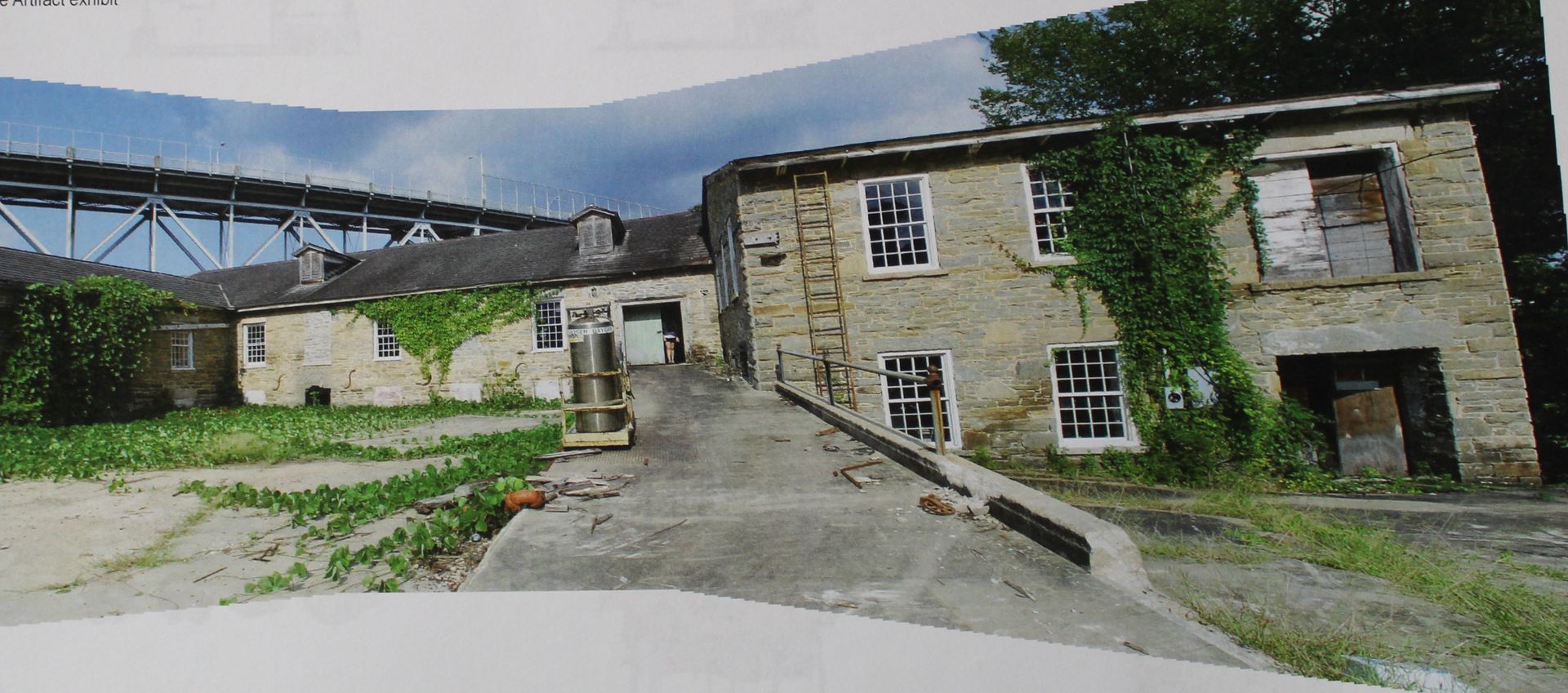
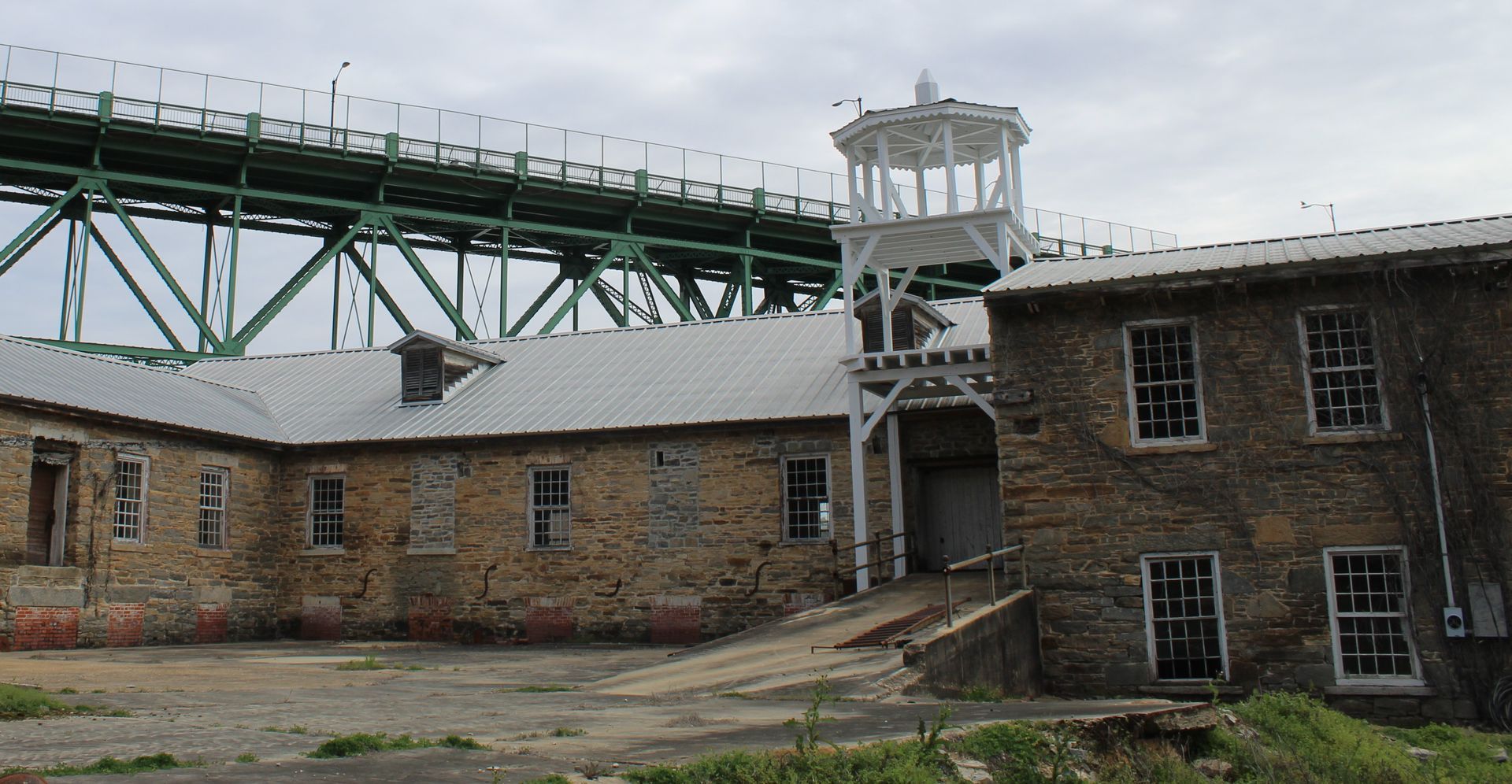
Tallassee’s 120,000+ SF Historic Mill Site Positioned for Redevelopment
Tallassee, AL's Historic Mill complex has attracted institutional and academic interest among which, Dr. Tommy Brown at Auburn University archives seeks out mill records. This comes one year after feasibility studies confirm its viability as a large-scale mixed-use redevelopment opportunity.
Tallassee Redevelopment Authority(TRA)-sponsored studies back up that potential, showing:
- Estimated Rental Rates of $12-$18/SF premiums as riverfront commercial real estate(as opposed $5-10/SF locally)
- Estimated $12 Million dollars in annual economic impact
- Approximately 45% in Historic Tax credits (20% Federal + 25% State)
- Strategic positioning between Auburn and Montgomery
- Existing structure in place with modern electrical, HVAC, and water, display utilities readily available
- Stabilized structures reduce early-stage capital risk
And the TRA as its current owner, is actively seeking development partners to advance the site into its next phase.
Strategic Transition
This Tallassee Industrial Era property is closer than ever to its future. The site was continuously used up until 2005 as textile mill, making it one of the longest continuously operating mill sites in the nation. Due to changes in the market, the industry became underutilized and production ceased. Many Tallassee residents having worked there and through the effort of the Talisi Historical Preservation Society(THPS), have reduced investor risk. They raised over $30,000 dollars to put modern corrugated metal roofing on several of the buildings as well as restoring and currently performing upkeep. Stewardship by THPS enabled stabilization, having invested approximately $95,000 total in risk management and restoration efforts, after which ownership transitioned to the Tallassee Redevelopment Authority to facilitate professional redevelopment and investment partnerships. The TRA has sponsored professional studies as recently as 2025, which will be explored further in this article.
The Tallassee, AL Location Advantage
Regional positioning strengthens Tallassee’s redevelopment potential. Seated neatly between Auburn and Montgomery, it is only 10 minutes from I-85. With Auburn, AL experiencing a 34.2% population growth between 2015 and 2023(according to GoBankingRates), creates spillover housing and hospitality demand in nearby communities. Tallassee remains an ideal location for young families and commuting college students as well, seeing a cost of living 17% lower than the national average and 12.9% lower than the Opelika-Auburn area per PayScale.
Strong school performance further supports long-term residential and workforce stability. Tallassee City Schools also stand out for young families as one of the highest rated schools by the Alabama State Report Card between Auburn and Montgomery, AL. Tallassee Elementary was scored in the 2024-2025 with a 90/A grade by the state.
Tallassee's closeness to both of these cities, and access to 750,000 residents within 45 minutes act as a major opportunity for a commuting workforce. Many of which already commute to Tallassee's established industry such as GKN Aerospace, Neptune, and Hanil USA.
Professional Planning Confirms the Opportunity
In 2025, the Tallassee Redevelopment Authority commissioned a comprehensive redevelopment analysis conducted by Place Associates, LLC in collaboration with Leavell Design Consultants. The resulting Tallassee Mill Sites Redevelopment Report provides independent market validation, economic modeling, and phased development strategies for the site.
With authorization from the Tallassee Redevelopment Authority, this article makes the study available to prospective developers and partners seeking deeper due diligence insight.
Academic & Institutional Engagement
Auburn University
Interest in the Armory’s redevelopment potential extends beyond local preservation efforts. In 2009, Auburn University’s School of Architecture assigned a multidisciplinary student team to develop adaptive reuse concepts for the building. The resulting study—spanning more than 180 pages—explored viable redevelopment scenarios including a museum and visitor-centered destination, demonstrating early recognition of the site’s architectural and economic potential. The study remains publicly accessible at the Tallassee Falls Museum.
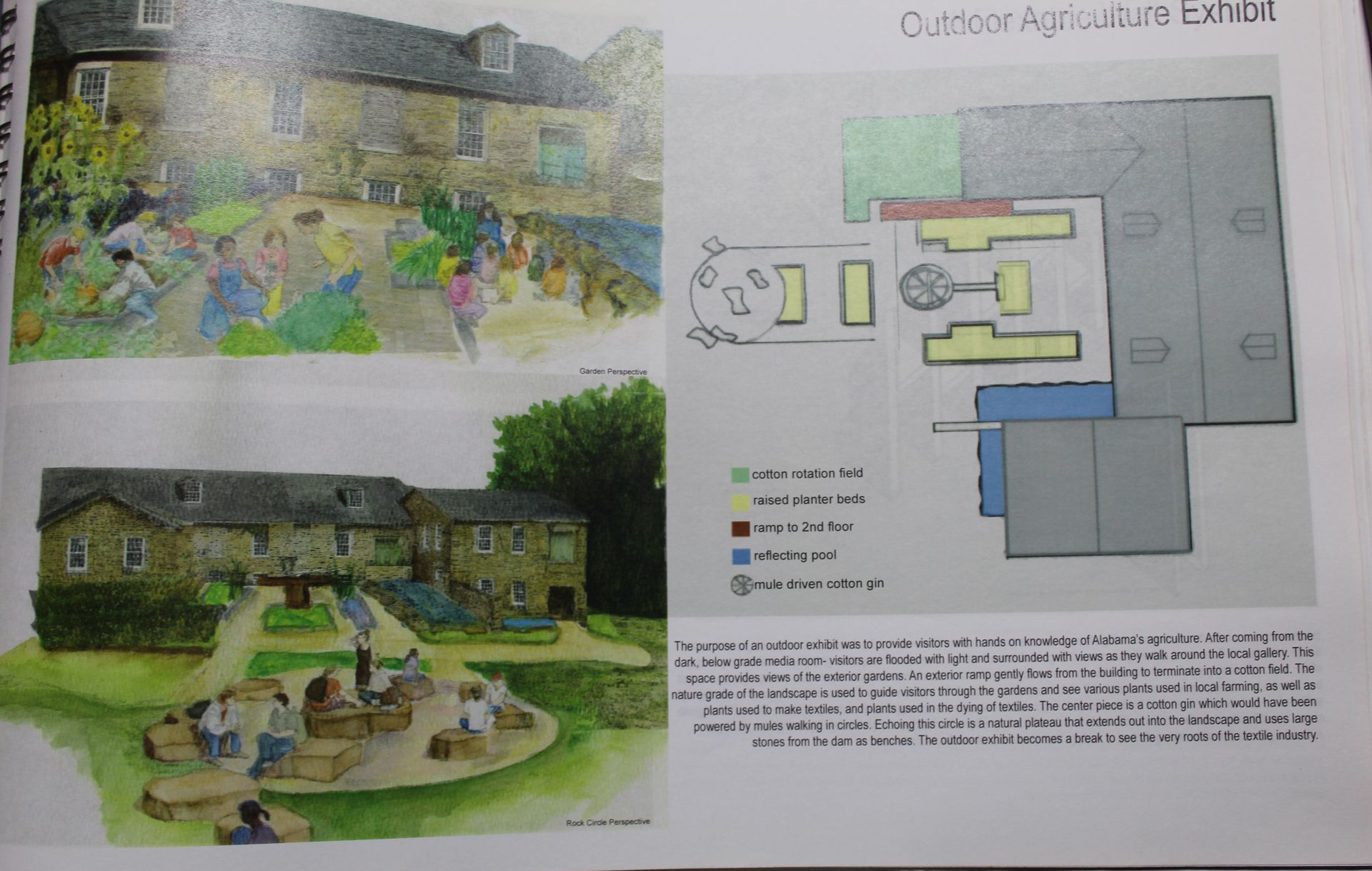
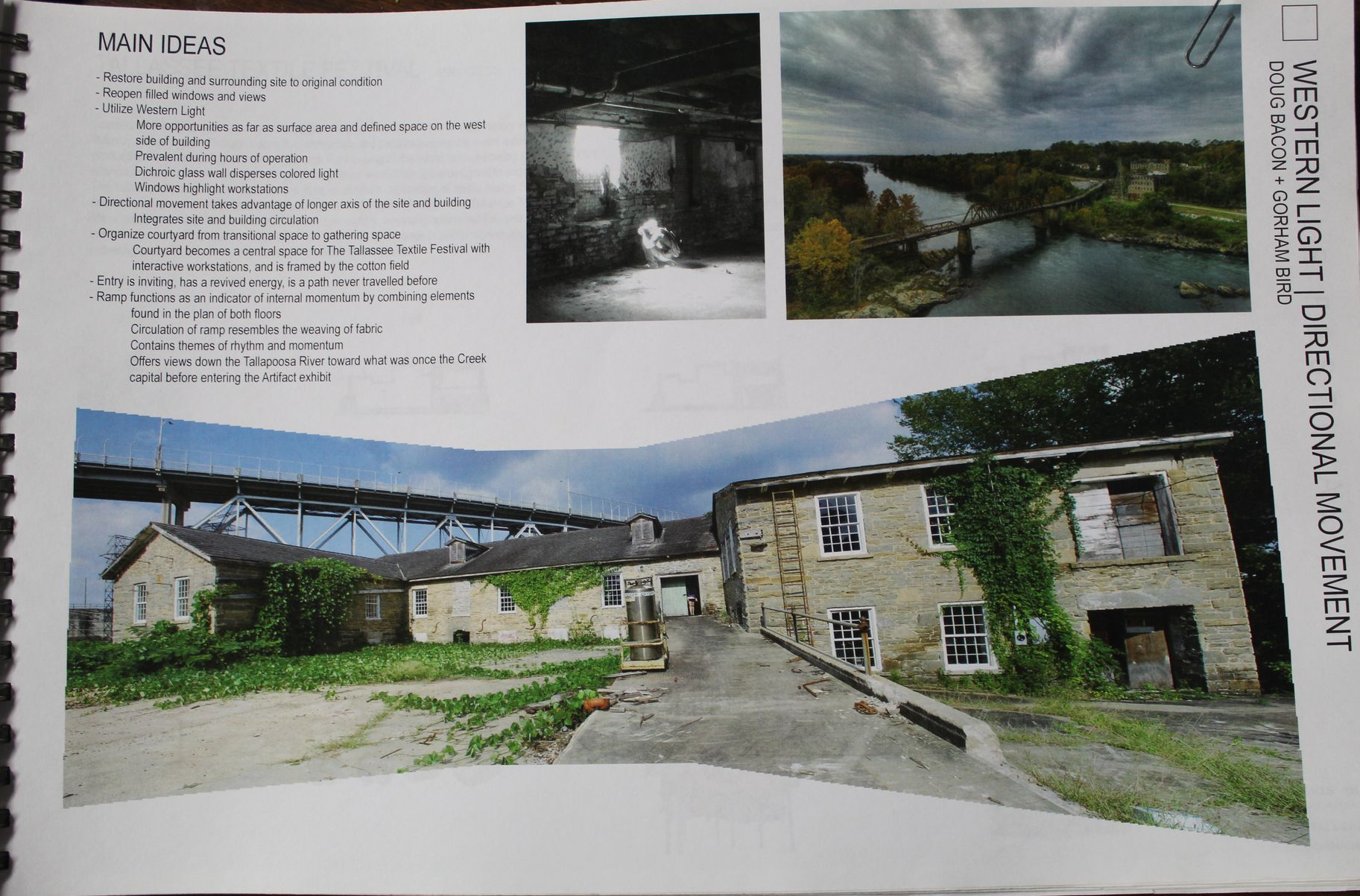
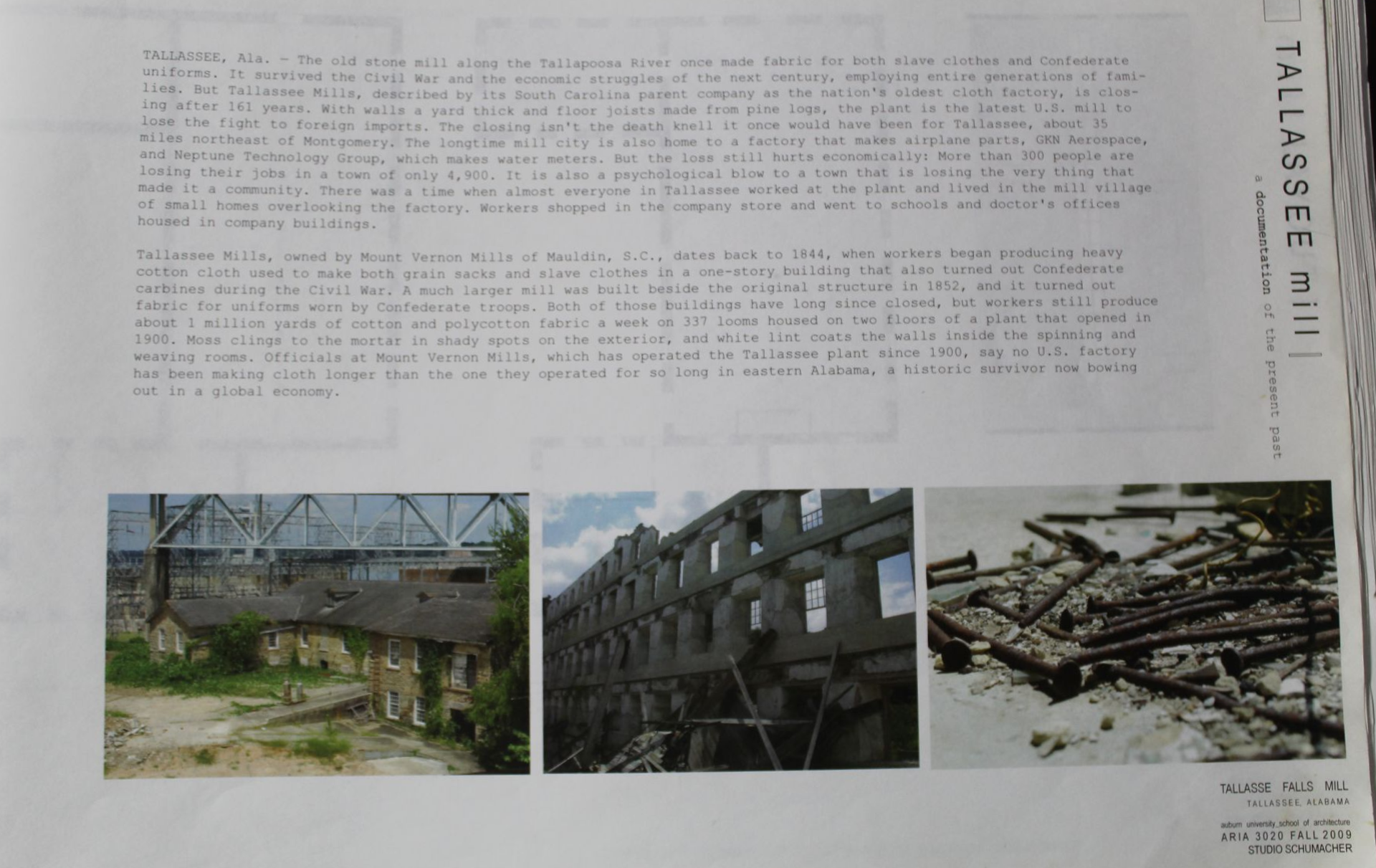
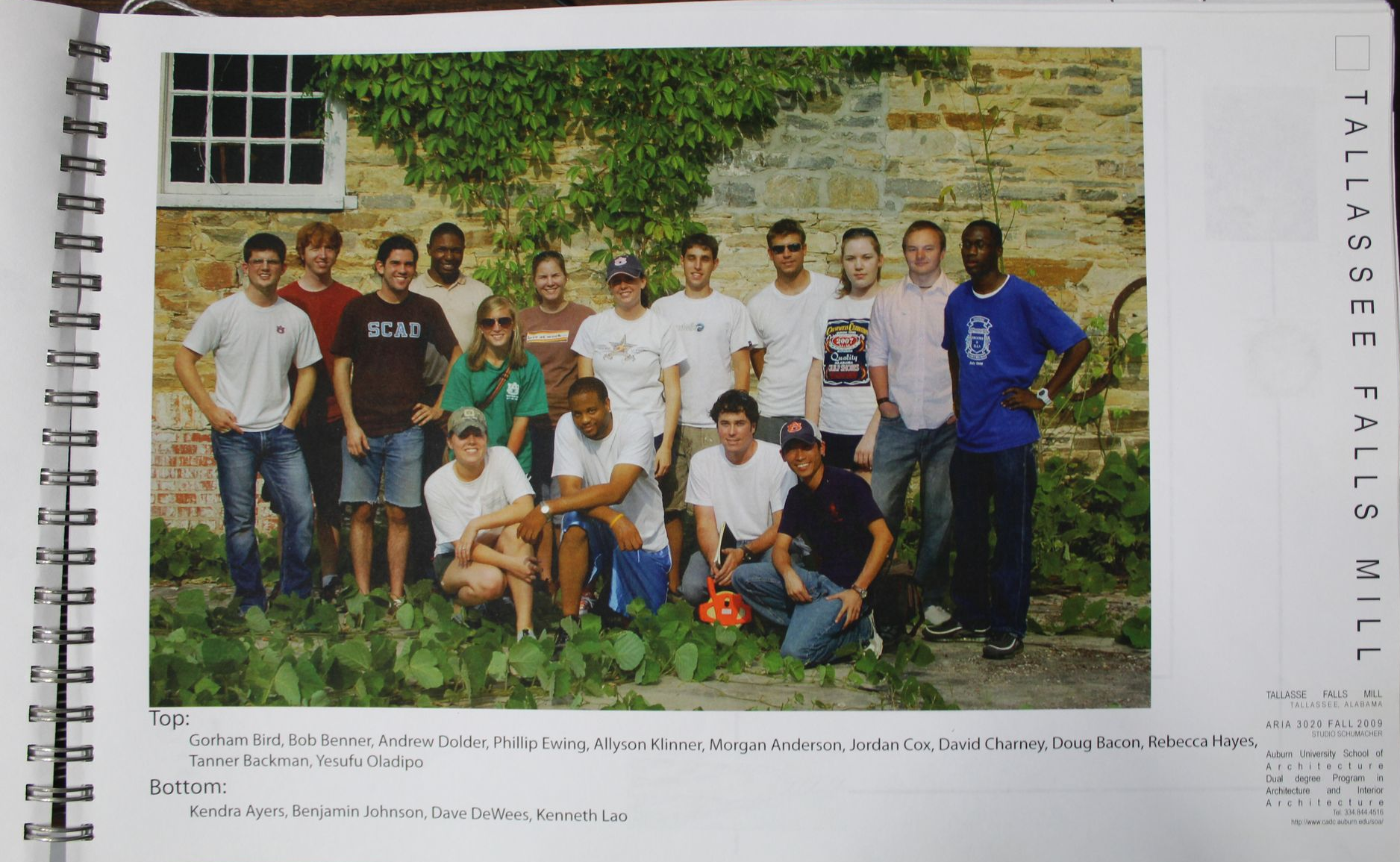
Auburn University’s engagement has continued in recent years through archival collaboration and student involvement supporting local historical initiatives such as Dr. Tommy Brown's visit in March 2026. This sustained academic interest reflects broader recognition of Tallassee’s industrial heritage as both culturally significant and adaptable for future use.
Community engagement has also grown alongside institutional involvement. Tallassee High School students participated in Auburn University’s Engineering Day in 2025, illustrating an emerging pipeline connecting local heritage, education, and future workforce development.
Alabama Department of Economic Development (ADECA)
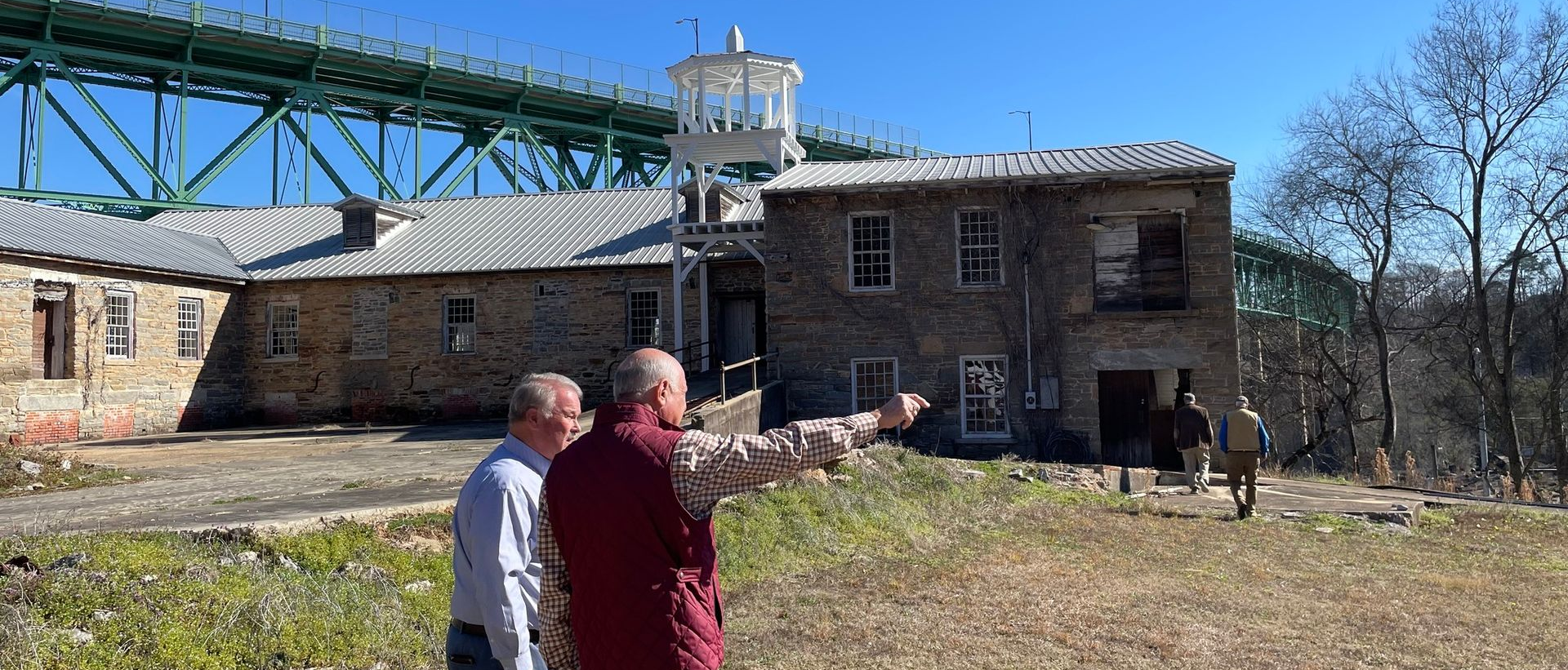
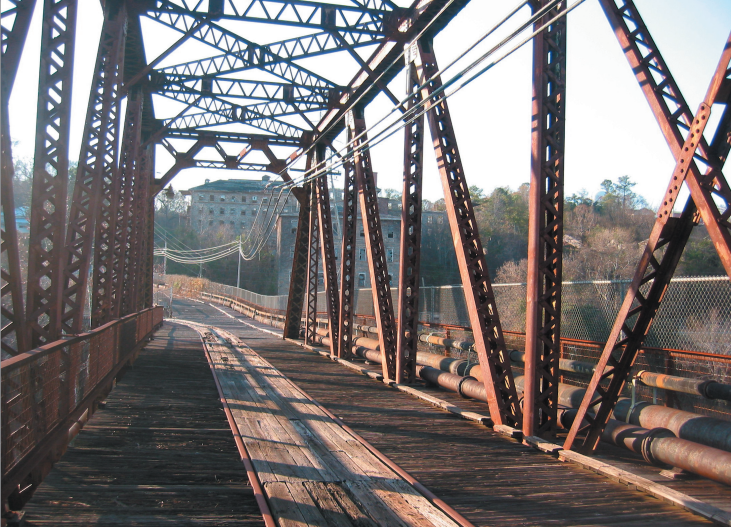
Earlier this year, director Kenneth Boswell of ADECA came to Tallassee with interests of seeing Tallassee grow. He visited several sites around Tallassee including the Armory and Mill site. Mayor Joey Wiginton aims to take advantage of grant opportunities starting with converting the nearby railroad bridge into a pedestrian walking bridge. In February, the city council moved to apply for a Rebuilding Alabama Act(RAA) Grant with intentions of renovating the bridge. On March 9, city officials allocated funds to the TRA to complete an engineering study of the bridge so as to move forward with construction.
This development of a pedestrian crossing bridge would put the mill sites in direct walking path of residents crossing the Tallapoosa on foot.
The Best Adaptive Use Candidates in Tallassee, AL
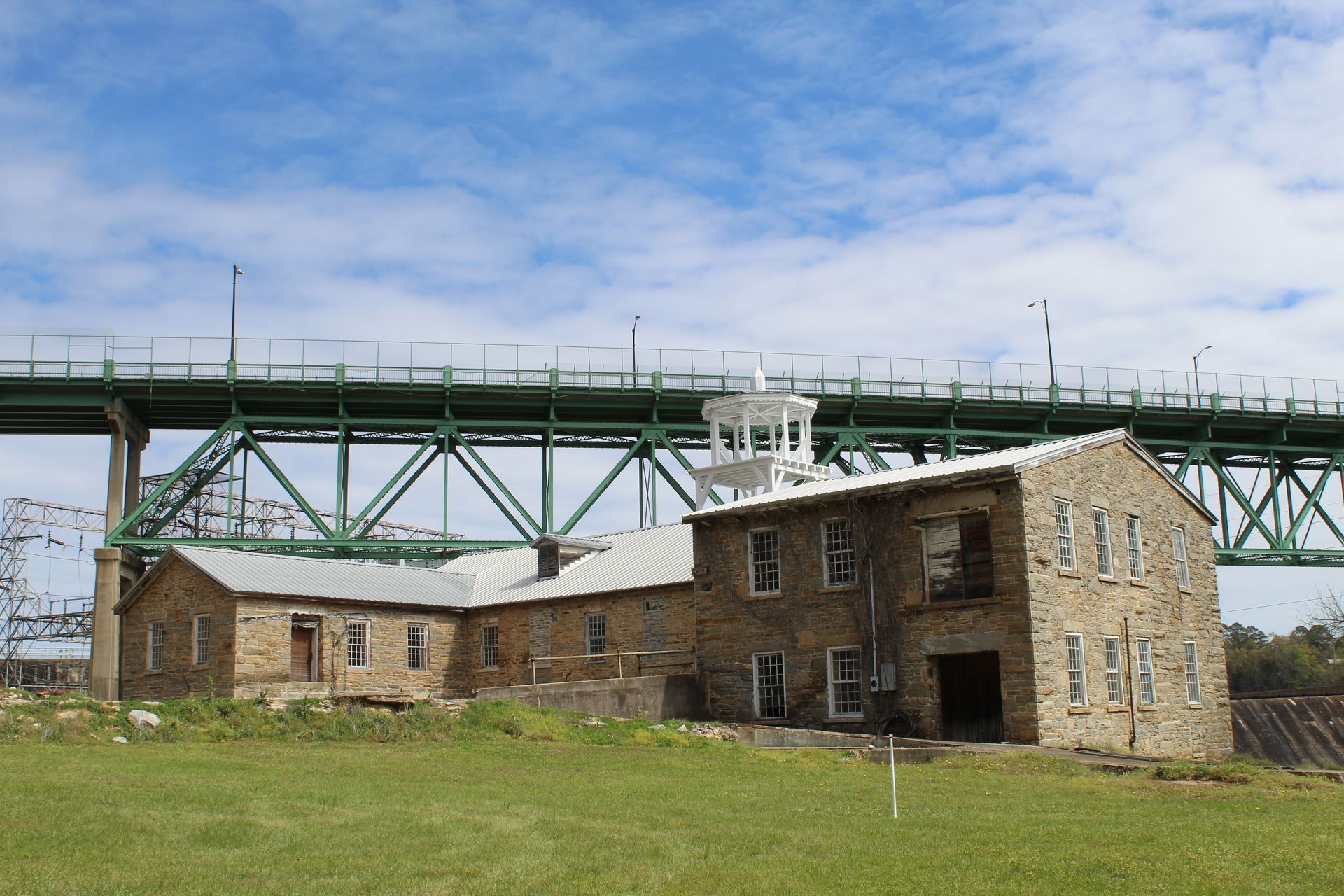
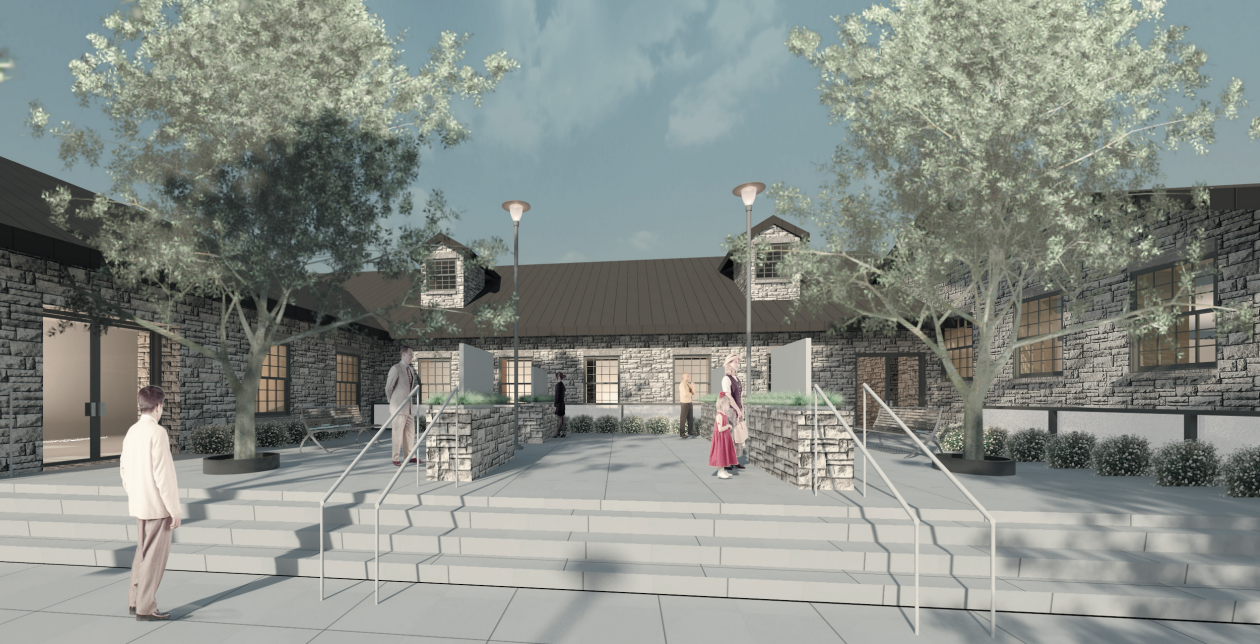
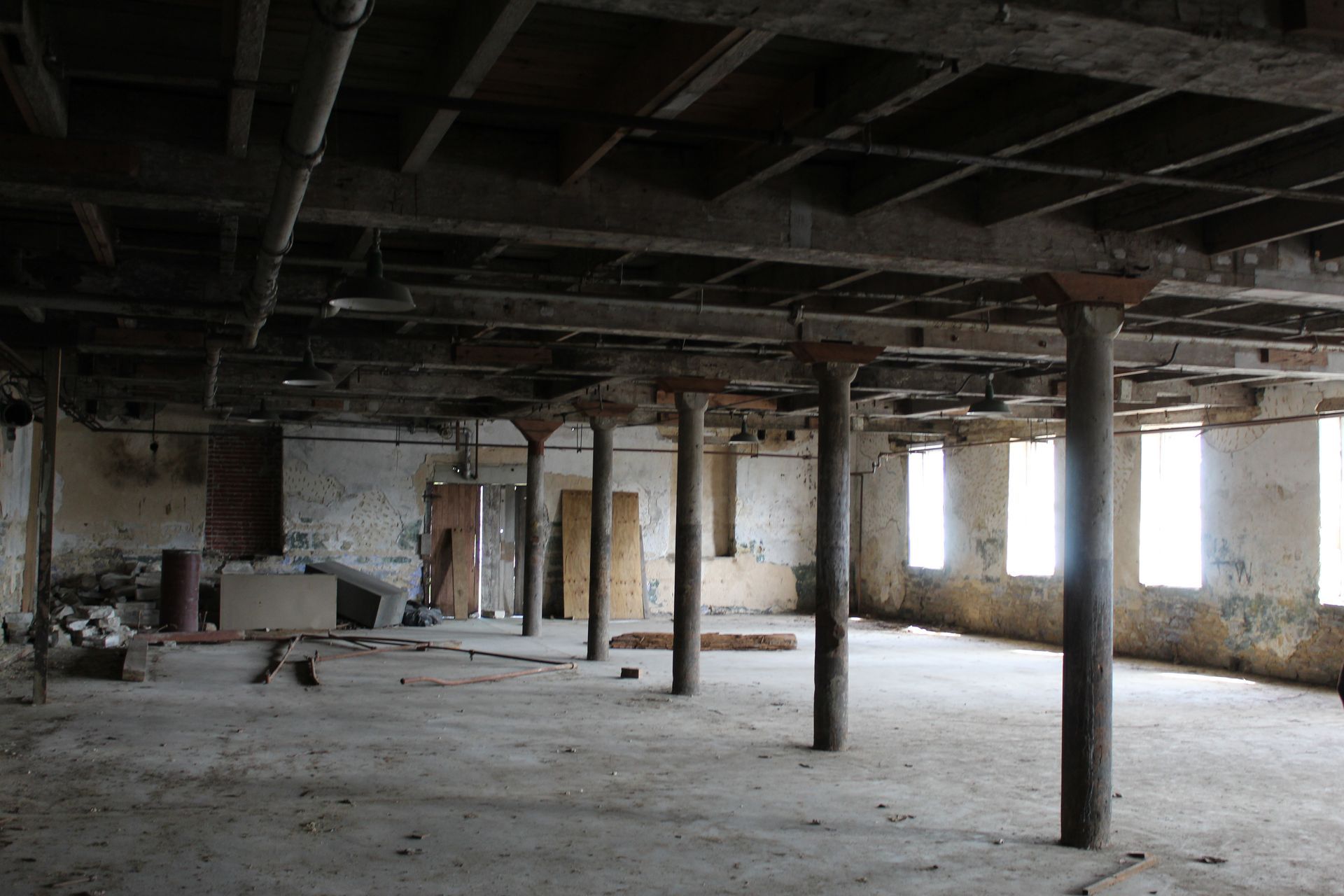
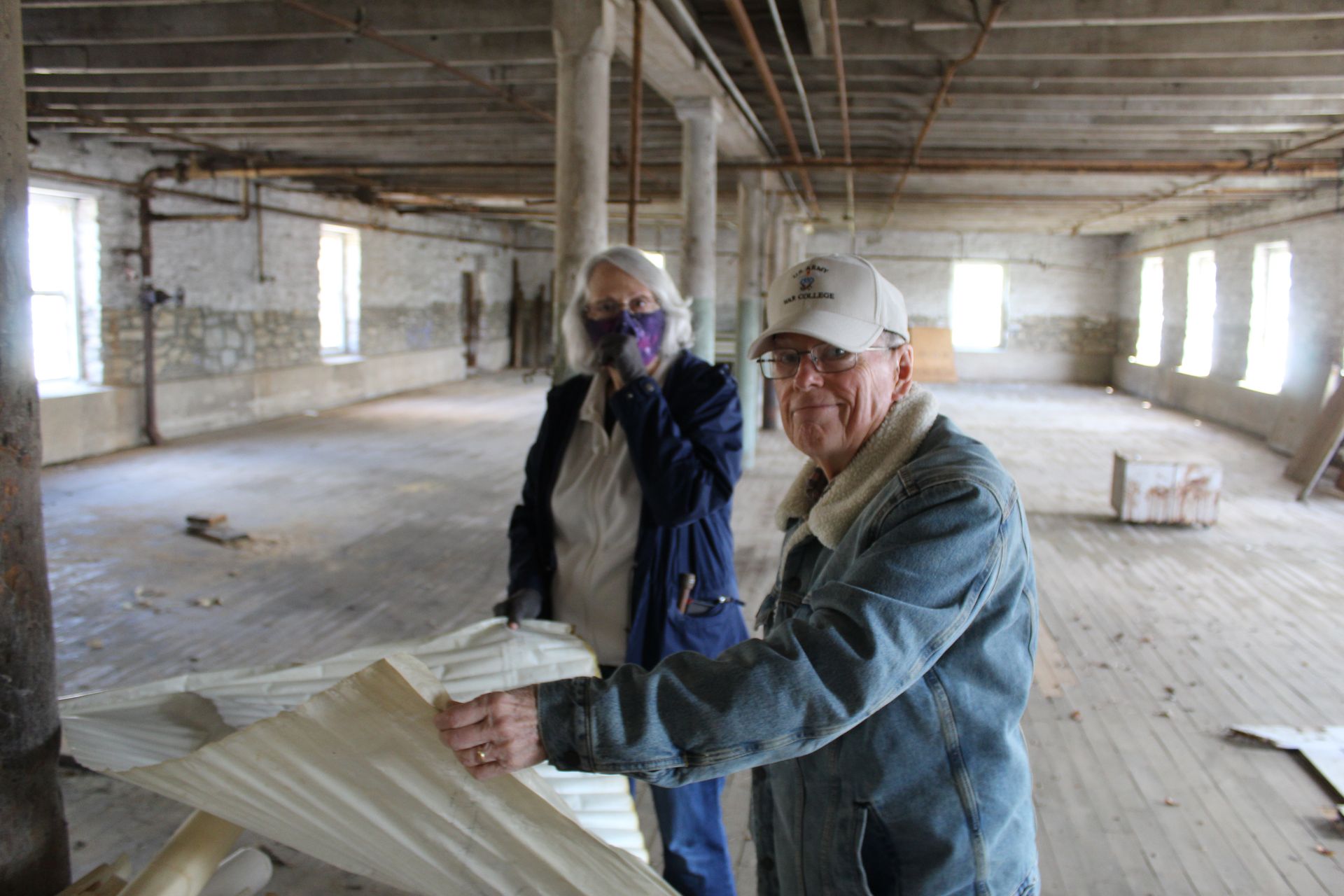
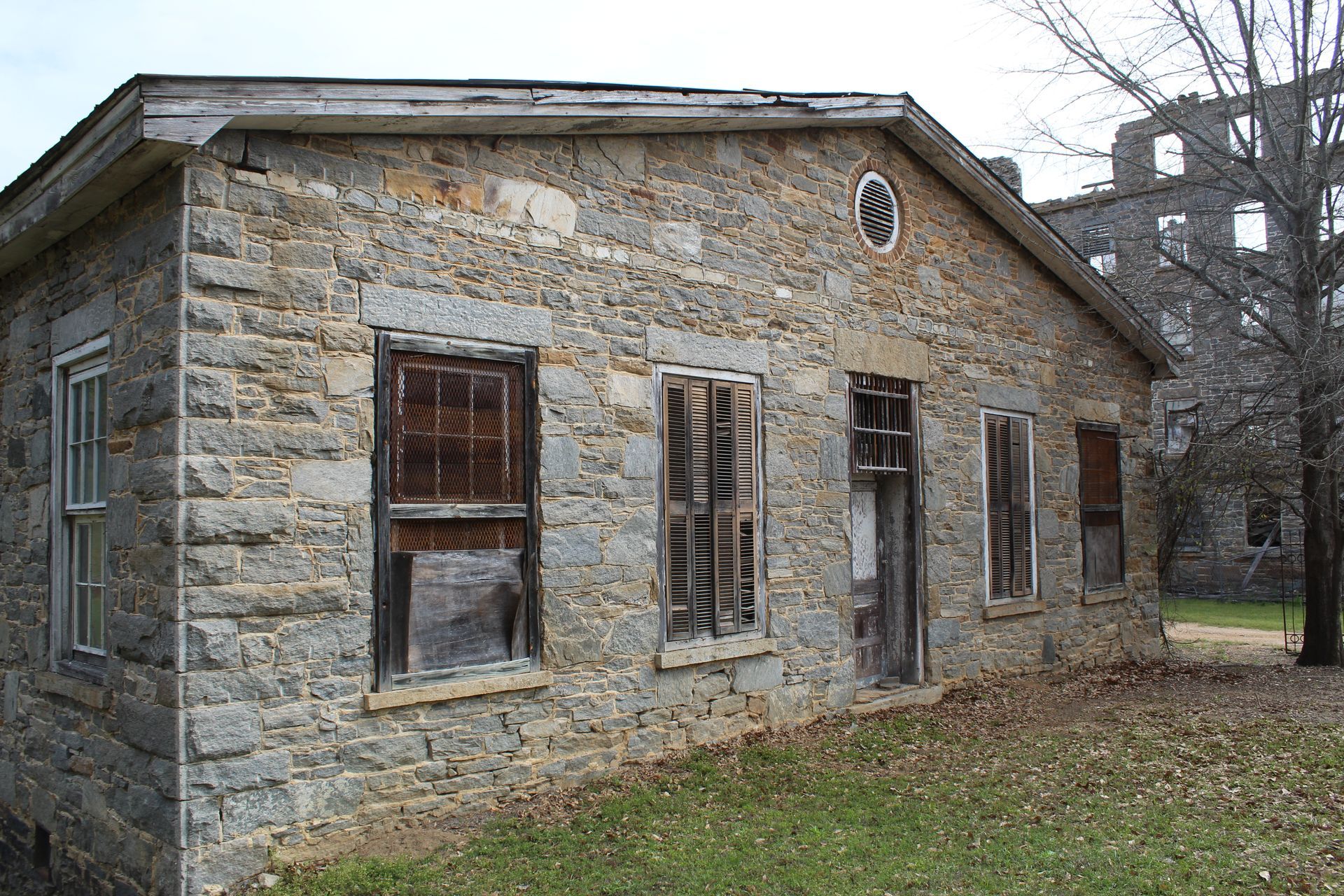
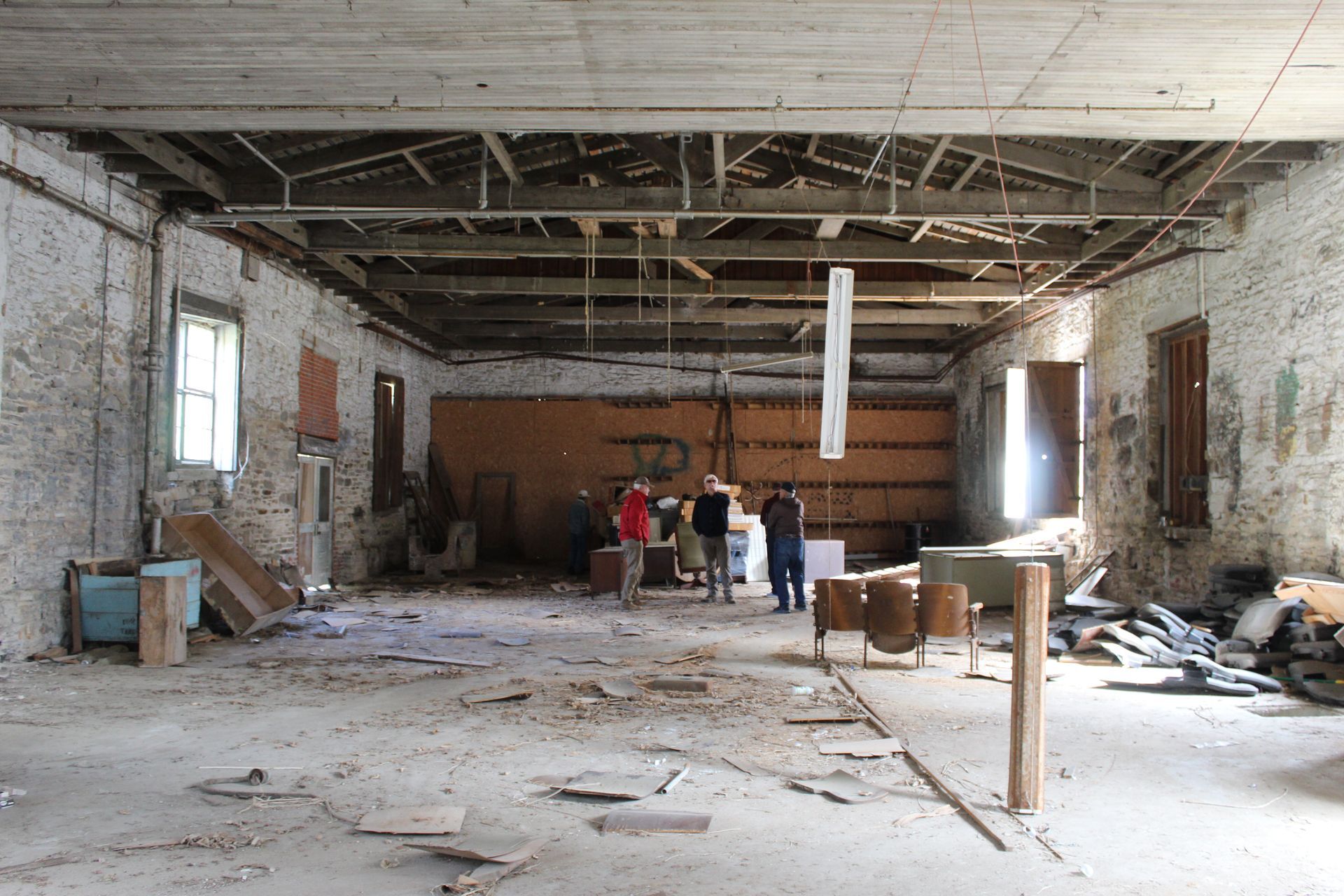
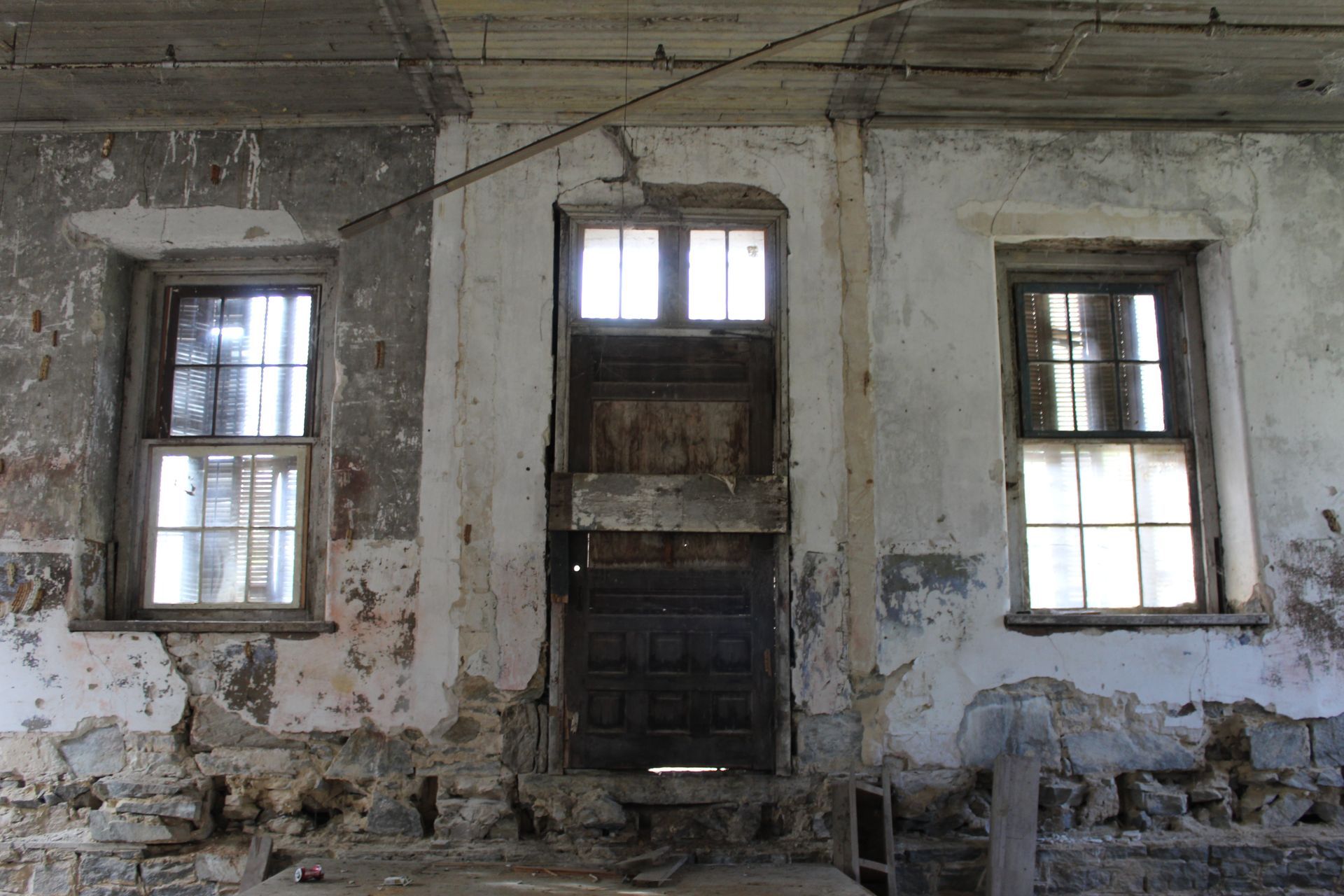
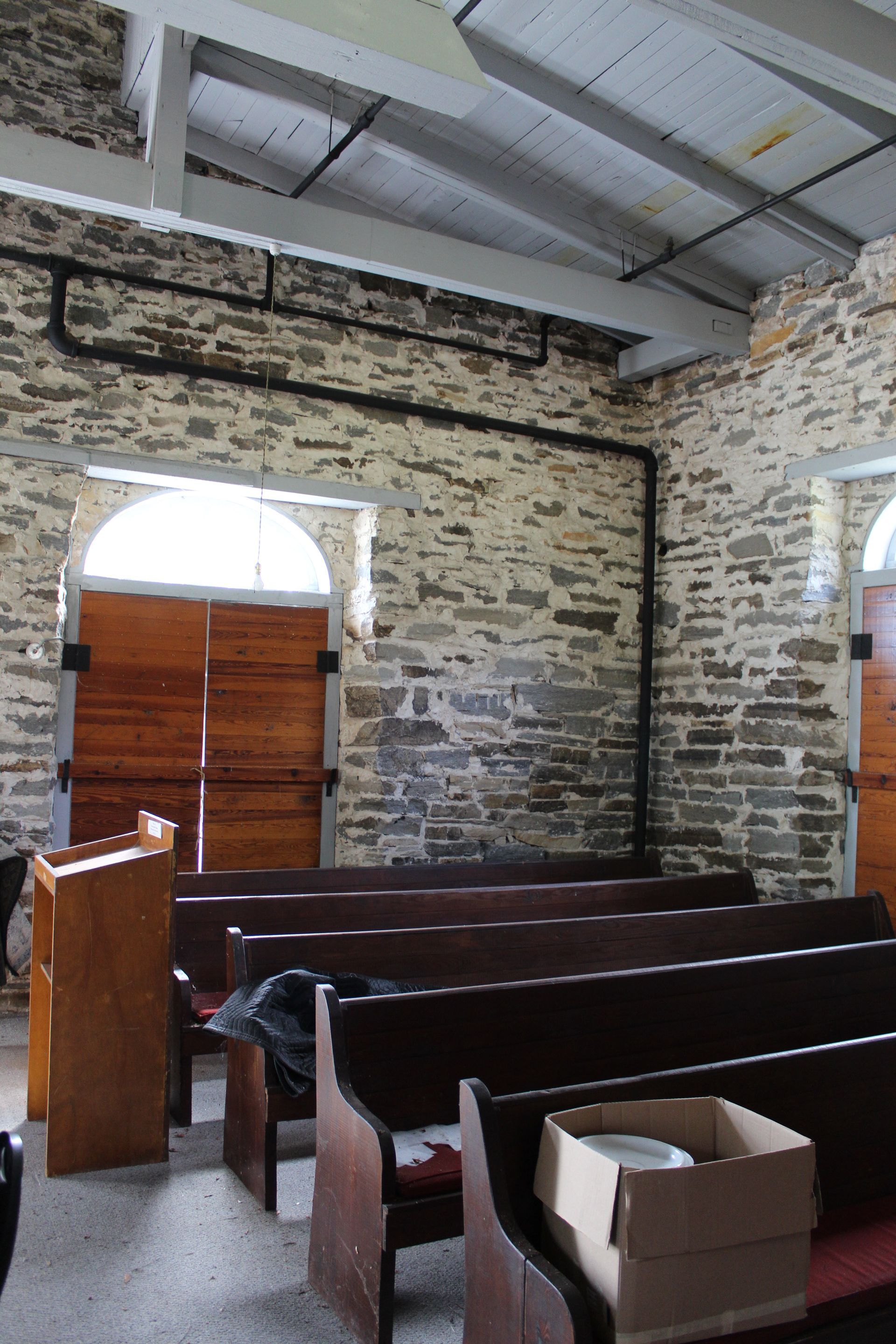
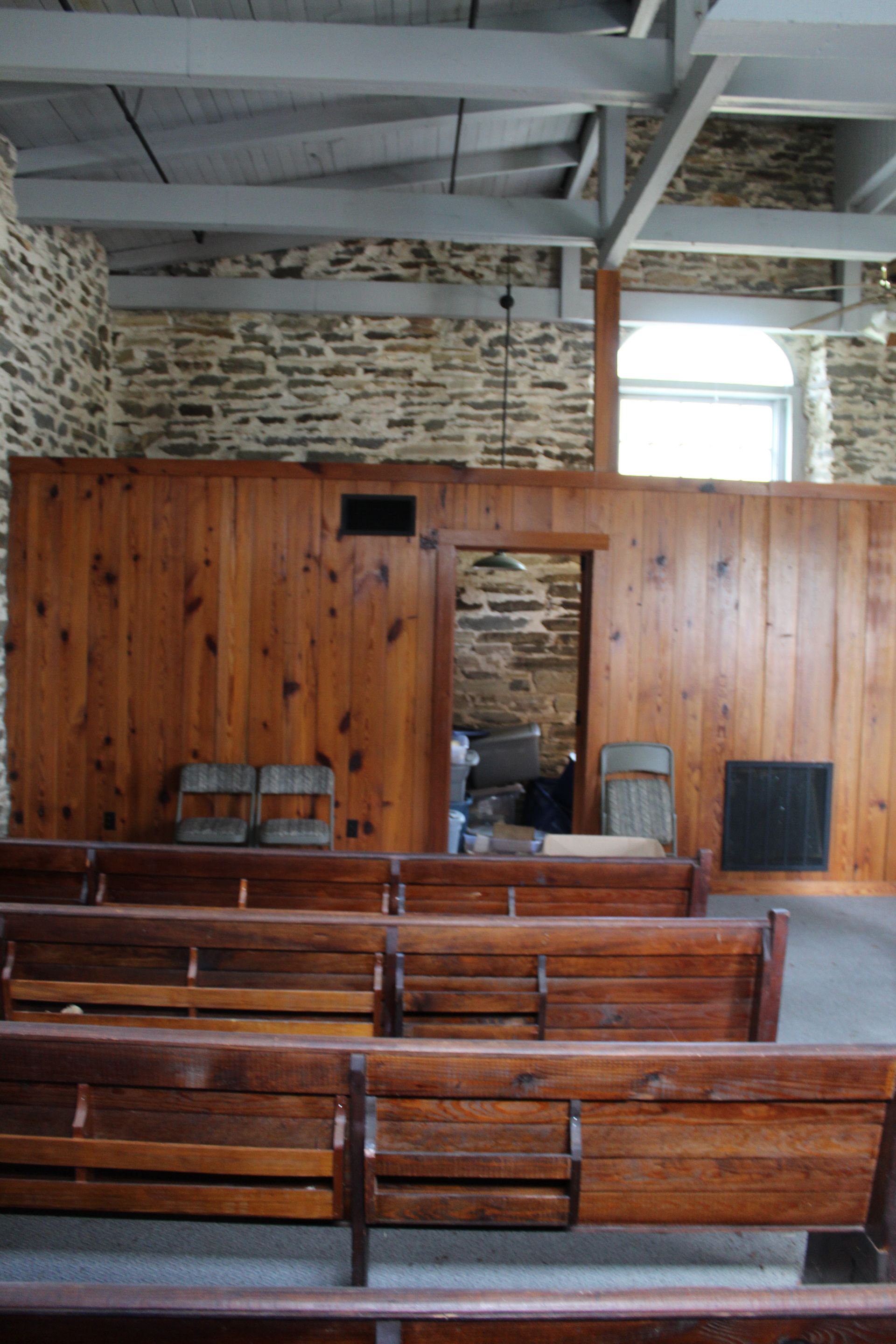
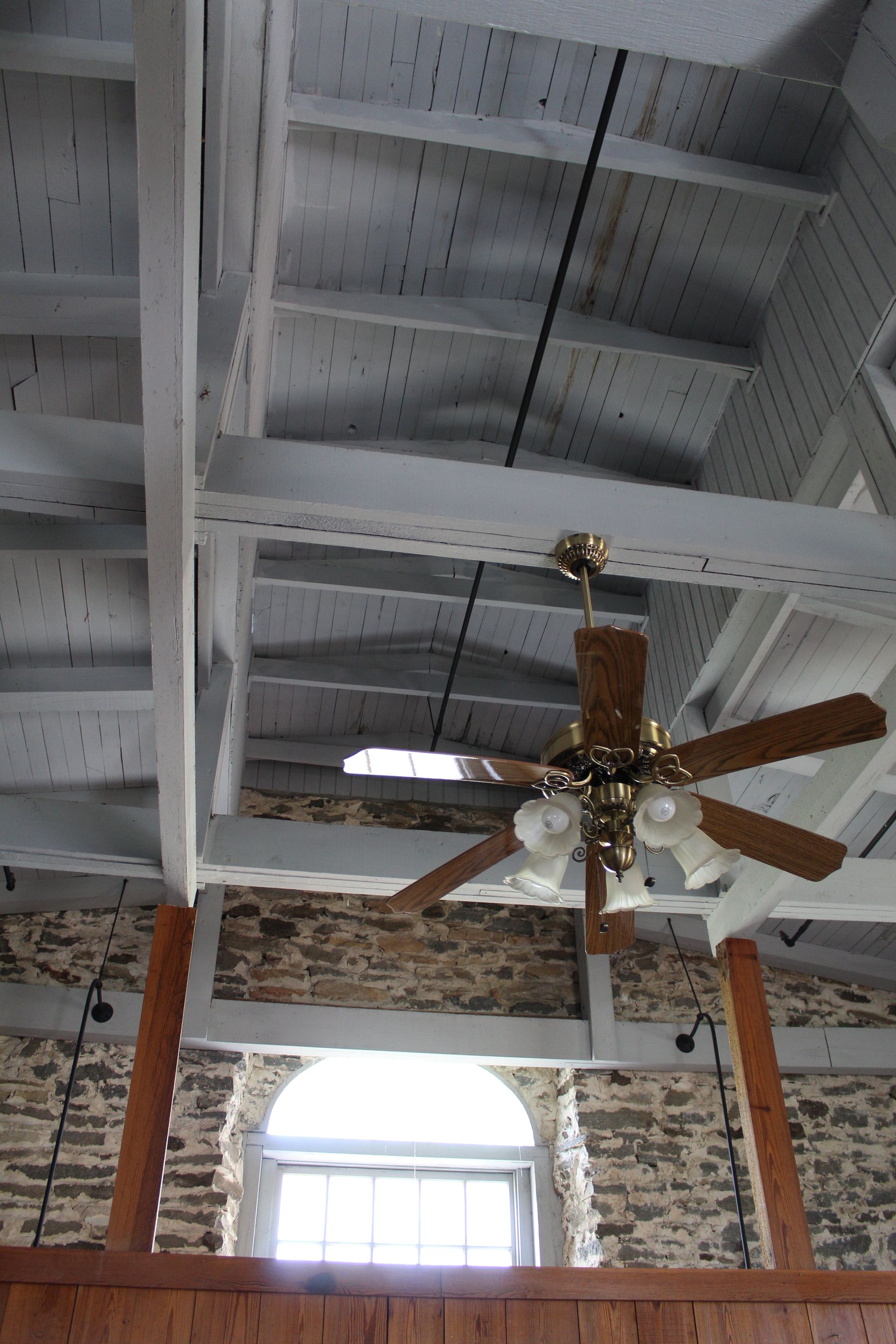
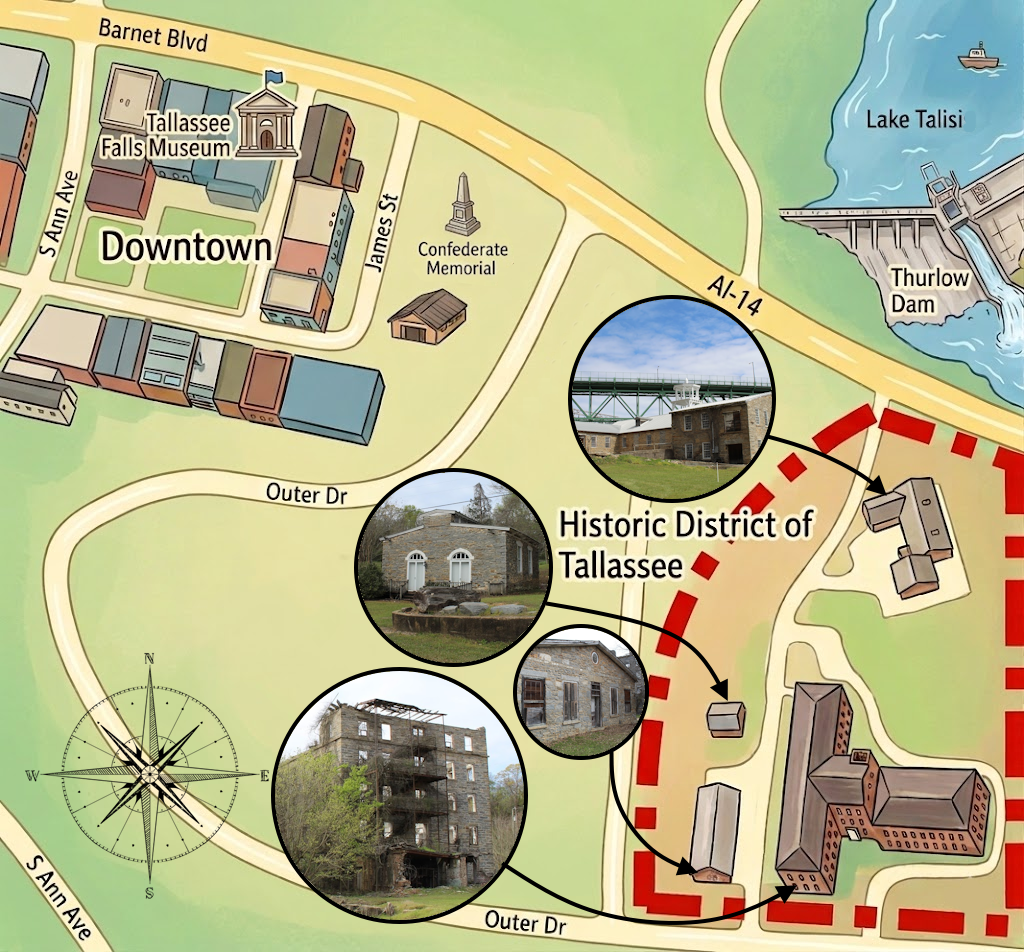
The Armory (1844)
Investment Snapshot
- 12,200 SF historic masonry structure
- Stabilized with modern roofing improvements
- National Register Historic District eligibility
- Highly adaptable mid-scale redevelopment footprint
- Positioned as cultural or experiential anchor asset
Competitive Advantage
Few redevelopment sites offer a structure with both industrial and military heritage significance. Originally constructed as a cotton mill before serving as a Confederate armory during the Civil War, the building represents a rare surviving example of Tallassee’s industrial and wartime history.
Historic structures with strong narrative identity consistently outperform comparable new construction in experiential retail and tourism-driven redevelopment because authenticity cannot be replicated. Adaptive reuse projects across the Southeast have demonstrated that preserved industrial architecture becomes a destination in itself, attracting visitors and tenants seeking character-driven environments.
The Armory’s scale makes it uniquely suited to become an anchor attraction without requiring the capital intensity of the larger mill redevelopment.
Market Drivers
Regional tourism trends increasingly favor experiential destinations combining history, education, and entertainment. Successful adaptive reuse projects such as Lowe Mill Arts & Entertainment in Huntsville transformed a former textile facility into one of the nation’s largest arts incubators, drawing consistent visitor traffic and supporting surrounding businesses.
Tallassee’s existing historical programming and reenactments provide a built-in audience foundation that can expand into heritage tourism offerings, educational programming, and event-driven visitation.
Development Potential
- Heritage museum + event venue hybrid
- Boutique wedding or reception venue
- Culinary or craft beverage concept tied to regional history
- Educational partnership space aligned with Auburn University engagement
- Visitor center anchoring the broader district
Smaller adaptive reuse anchors frequently catalyze larger redevelopment phases by establishing early visitor activity and revenue flow.
Risk Mitigation
- Roof stabilization completed through community investment
- Structural masonry preserved
- Historic designation supports tax credit financing
- Modest building scale reduces initial capital exposure
Historic Context
Standing since 1844, the Armory connects Tallassee’s industrial origins with its Civil War-era history. Its survival through nearly two centuries positions it as one of the district’s most symbolically important structures and a natural storytelling centerpiece for redevelopment.
The 1800s Warehouse
Investment Snapshot
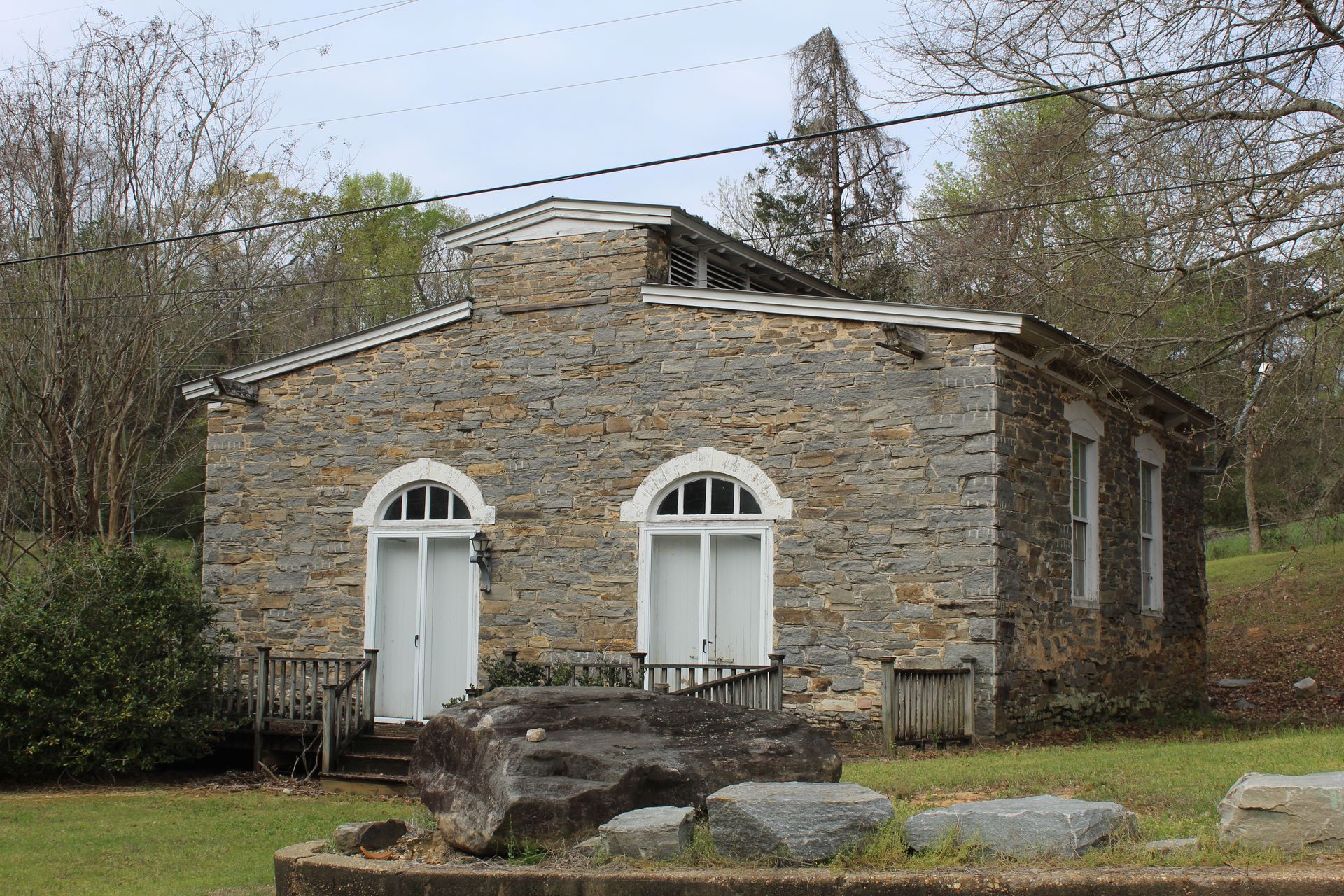
- ~4,300 SF flexible industrial structure
- Stabilized historic masonry construction
- Open-span interior adaptable to multiple tenant types
- Closest building access to Outer Drive corridor
- Ideal early-phase activation opportunity
Competitive Advantage
Warehouse conversions consistently represent the fastest path to revenue generation in adaptive reuse districts. Across Southern redevelopment projects, former warehouses have successfully transitioned into breweries, food halls, markets, and creative workspaces due to their flexible layouts and lower rehabilitation complexity.
Its manageable size allows phased tenant build-outs rather than large upfront redevelopment risk.
Market Drivers
Smaller cities revitalizing industrial districts frequently begin with food-and-beverage or maker-space tenants that establish destination appeal. Birmingham’s Urban Supply redevelopment demonstrates how incremental adaptive reuse, rather than large single investments, can catalyze sustained district growth through placemaking and local entrepreneurship.
Tallassee currently presents a regional gap for riverfront gathering spaces serving both residents and visitors traveling between Auburn and Montgomery.
Development Potential
- Brewery or distillery
- Food hall or artisan market
- Maker space or fabrication studios
- Outdoor recreation outfitter hub
- Riverside café or live-music venue
This building offers an opportunity to create immediate activity while larger redevelopment phases advance.
Risk Mitigation
- Smaller footprint lowers redevelopment cost threshold
- Flexible tenant mix reduces reliance on a single use
- Phased leasing allows incremental capitalization
Historic Context
Constructed using the same 19th-century masonry techniques as the larger mill buildings, the warehouse reflects the operational backbone that once supported Tallassee’s textile economy and now offers adaptable space for modern enterprise.
The Boiler Room
Investment Snapshot
- ~1,200 SF renovated structure
- Existing HVAC, electrical, plumbing, and restroom
- Move-in-ready adaptive reuse candidate
- Highly distinctive industrial character
Competitive Advantage
Unlike larger redevelopment components, the Boiler Room already demonstrates modern utility readiness, allowing near-term activation. Small-scale adaptive reuse buildings often become signature experiential spaces within redevelopment districts, establishing identity and foot traffic ahead of larger investments.
Comparable redevelopment districts frequently activate smaller structures first to create momentum and demonstrate viability to investors and lenders.
Market Drivers
Experience-based destinations—restaurants, small venues, and specialty gathering spaces—are increasingly central to revitalized industrial districts. Across adaptive reuse projects nationally, early hospitality concepts generate consistent visitation and help redefine public perception of formerly industrial areas.
Tallassee’s riverfront positioning creates opportunity for a destination dining or social venue not currently present in the local market.
Development Potential
- Riverside restaurant or café
- Craft cocktail or wine venue
- Outdoor recreation check-in hub
- Event rental or micro-venue
- Developer showcase space during phased redevelopment
Risk Mitigation
- Existing utilities reduce upfront infrastructure costs
- Smallest capital requirement among site assets
- Independent operational capability separate from full-site redevelopment
Historic Context
Once supporting the mechanical heart of mill operations, the Boiler Room now represents one of the most immediately usable spaces on the property—bridging Tallassee’s industrial past with its next phase of activation.
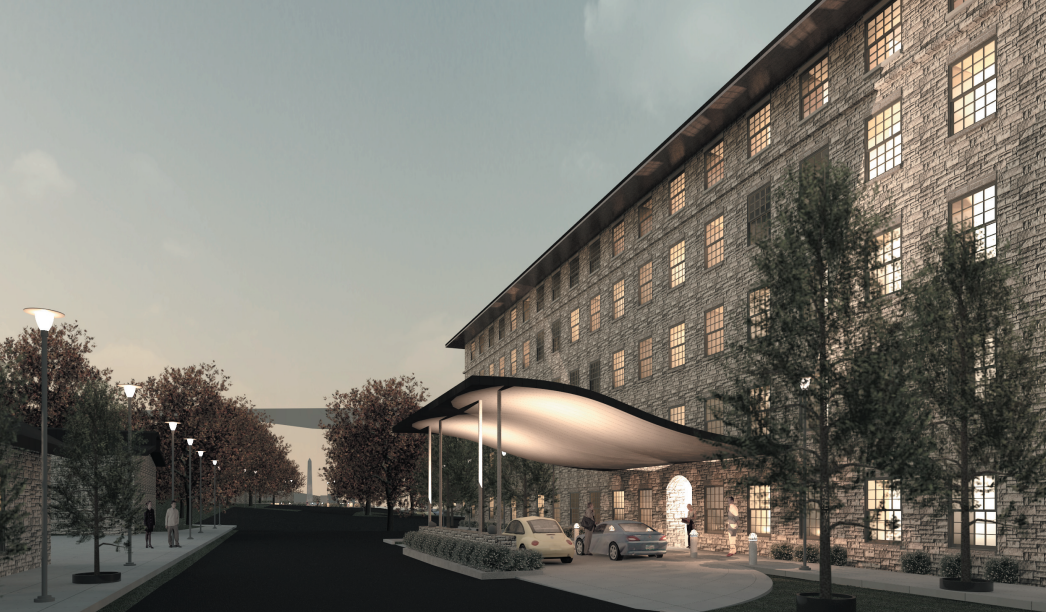


The 1852 Mill
Investment Snapshot
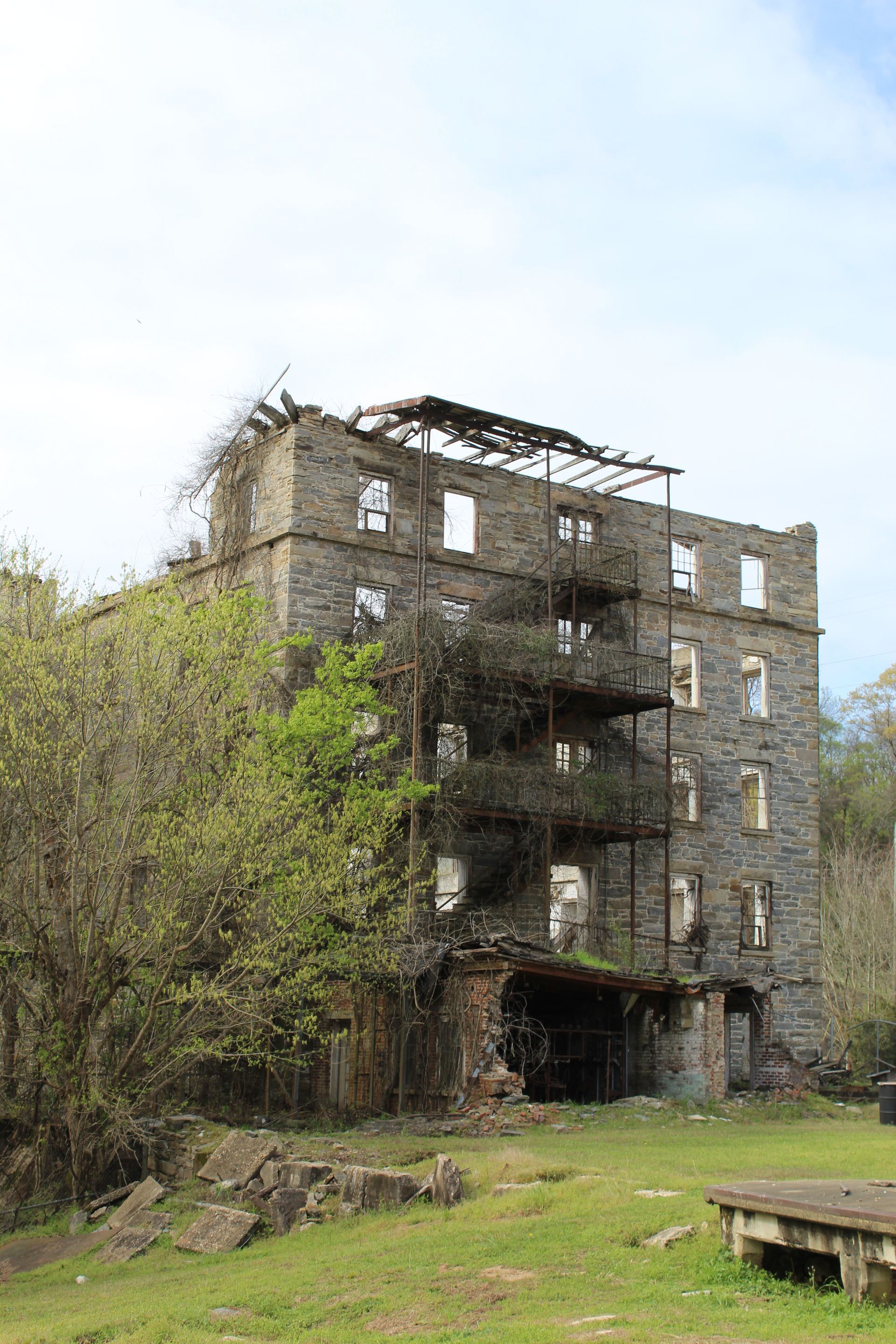
- ~80,000 SF historic riverfront structure
- Additional ~30,000 SF Duck Mill expansion opportunity
- Structural masonry shell preserved for redevelopment
- Positioned for destination hospitality, boutique hotel, or mixed-use redevelopment
- High visibility from the iconic Benjamin Fitzpatrick Bridge
- Largest adaptive reuse component within the Tallassee Mill District
Competitive Advantage
Unique Riverfront Positioning
The 1852 Mill presents a rare opportunity to develop hospitality or mixed-use space directly along the Tallapoosa River. While nearby Lake Martin supports seasonal lodging demand, comparable riverfront hotel inventory remains limited within Central Alabama, positioning the site to capture an underserved market segment.
Landmark Visibility
Few redevelopment sites benefit from continuous regional visibility. The Mill is prominently viewed by daily commuters traveling between Tallassee, Auburn, and surrounding industrial employers via the Benjamin Fitzpatrick Bridge, providing built-in visual identity and branding potential.
Distinctive Industrial Setting
Located at the fall line below the Thurlow Hydroelectric Dam, the site offers elevated river views and an industrial-scenic landscape uncommon among typical flat riverfront developments. This combination of historic architecture and dynamic water features creates experiential value increasingly sought in destination hospitality projects.
Financial Advantage
As part of a National Register Historic District (ID: 09000734), redevelopment may qualify for up to 45% Historic Tax Credits (20% Federal + 25% State), significantly reducing effective project basis and improving feasibility for premium adaptive reuse scenarios. The preserved 19th-century masonry façade provides authentic architectural character difficult to replicate through new construction.
Market Drivers
Regional growth trends support expanded hospitality and experiential development within the Auburn–Montgomery corridor.
- Auburn University athletics generate significant seasonal lodging demand, with visitors frequently seeking accommodations outside Auburn during peak weekends.
- The site lies within 15 minutes of Monster Mountain MX, a nationally recognized motocross destination hosting recurring amateur national competitions and the AMA Alabama State Championship.
- Access to approximately 750,000 residents within a 45-minute drive positions Tallassee as a convenient regional getaway and event destination.
- Existing industrial employers create consistent weekday travel demand complementing weekend tourism activity.
Together, these drivers support both conference-oriented and leisure-based hospitality models.
Development Potential
Riverside hospitality anchored by the Mill structure represents a proven redevelopment model across Alabama and the Southeast. Adaptive reuse projects combining historic architecture with conference and event programming have demonstrated strong performance in comparable markets.
The adjacent 30,000 SF Duck Mill creates an opportunity for a dedicated conference or event component aligned with successful precedents such as Florence, Alabama’s Renaissance Shoals Resort Conference Center model.
Potential uses include:
- Boutique riverfront hotel
- Conference and event center
- Mixed-use hospitality and dining destination
- Residential loft or extended-stay concept
- Hybrid experiential tourism hub
Other uses have been considered such as a small-medium scale data center in mid 2026.
Phased redevelopment allows activation of smaller site assets while the Mill undergoes full buildout.
Scarcity of Opportunity
Large-scale historic riverfront industrial structures with intact masonry and historic tax credit eligibility are increasingly rare, particularly within Central Alabama. As similar mill properties across the region deteriorate, are demolished, or redeveloped for single-use purposes, opportunities of this scale continue to diminish.
The Tallassee Mill represents one of the few remaining sites capable of supporting transformational adaptive reuse within the Auburn–Montgomery growth corridor.
Risk Mitigation
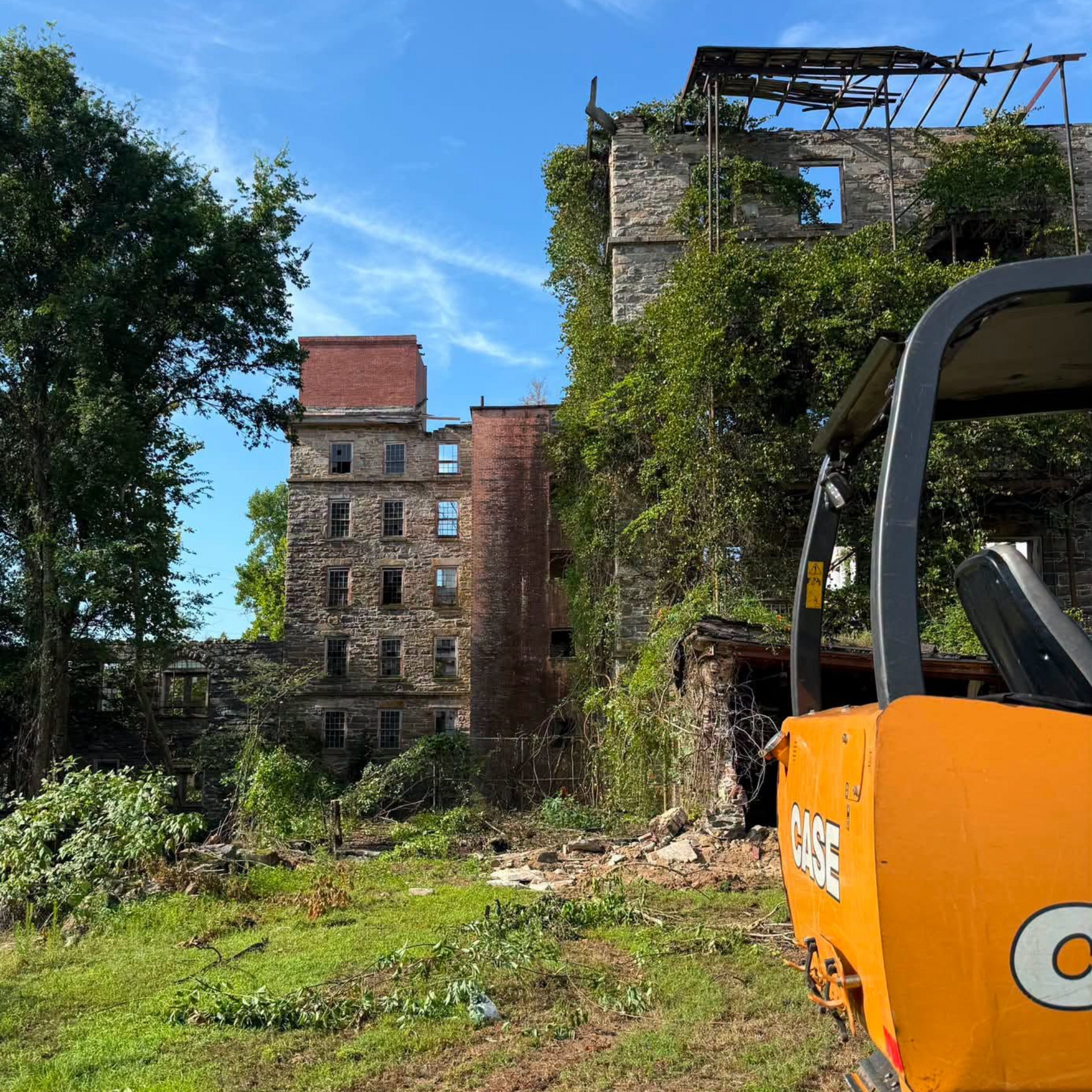
- Structural masonry walls remain intact following closure in 2005.
- Interior floors were intentionally removed to reduce long-term structural load during vacancy and minimize future debris risk.
- Roof deterioration has been identified and quantified, simplifying redevelopment planning by eliminating concealed structural uncertainty.
- Environmental conditions have been assessed through professional studies with remediation costs already estimated.
These factors provide developers with clearer redevelopment parameters compared to many legacy industrial properties.
Historic Context
The 1852 Mill operated continuously until 2005, making it one of the oldest continuously operating textile facilities in the United States at the time of its closure. Generations of Tallassee residents worked within its walls, embedding the structure deeply within the community’s identity.
Today, that legacy strengthens placemaking potential—an increasingly valuable component of successful adaptive reuse developments where authenticity, storytelling, and local connection drive visitor engagement and long-term destination appeal.
With stabilization efforts complete and incentive structures in place, the 1852 Mill stands positioned to transition from preservation to productive redevelopment and was recently considered by developers for alternative uses such as a 20 MW data center.

Momentum Timeline
The recent developments in the mill sites are not an isolated incident, rather a culmination of various phases, leading up to its transition.
- 2005 - Tallassee Mill Closes down
- 2005-2008 - Floors removed from 1852 Mill
- 2009 - Auburn University School of Architecture generates Architecture study
- 2011 - TRA sponsors an independent Architecture Study proposing "Riverfront Heritage Park"
- 2012-2022
- Stabilized structures via professional roofing installation
- Restored damaged flooring in Armory with original Poplar wood planks
- Contracted regular lawncare and weed control services
- Completely modernized the Boiler Room where tenants used it for civic meetings
- 2023 - Stabilization completed
- 2024
- TRA Redevelopment Planning
- Armory Bell tower restored
- 2025
- City of Tallassee partners with CARPDC for Mill Redevelopment Report
- Bell Tower Painted; original mill bell obtained for tower
- 2026 - TRA Pursues Developer Outreach
- ADECA Director Boswell visits with interest in supplying grants
- Auburn University Associate Professor Studies Property
- 1852 Mill considered for Small/Medium Scale Data Center Redevelopment
Market Economics
Buildings Quick Reference
| Property Feature | The Warehouse | The 1852 Mill(5-story) | The Boiler Room | The Armory |
|---|---|---|---|---|
| Aprox. Sq. Footage | 4300 GSF | 80000 GSF + 30000 GSF(Duck Mill) | 1200 sqft | 12200 sqft |
| Current Status | Stabilized (New Roof) | Strong Wall-structure | Stabilized & Modernized | Stabilized(New Roof) |
| Utilities | Fiber-ready | Heavy Power Access(Dam) | Electrical / Modern HVAC / Bathrooms | Fiber-ready |
| Vertical Clearance | Aprox 18 Ft | ~12-14ft per floor | Over 12 ft | Varies(2.5 story) |
| Adaptive Reuse Potential | Mixed Use/Brewery/Maker Space | Hospitality Opportunity | - | Musuem/Civic |
| Zoning | Historic Downtown District | Historic Downtown District | Historic Downtown District | Historic Downtown District |
| Distance to I-85 | 10 Minutes | 10 Minutes | 10 Minutes | 10 Minutes |
Local Zoning
The City of Tallassee classifies the Mill area as part of the Historic downtown District(click to see full Zoning Document):
305.05. Historic Downtown District (HD). This district is intended to serve as the retail, financial, and service focal point of Tallassee. In general the HD district provides for uses of local importance and encourages private investment in the development of uses appropriate for a central city area (i.e. small retail shops, restaurants, offices and government buildings). Aesthetics and access will be of major importance for development proposed in this district and two story buildings will be encouraged.
Infrastructure & Utilities
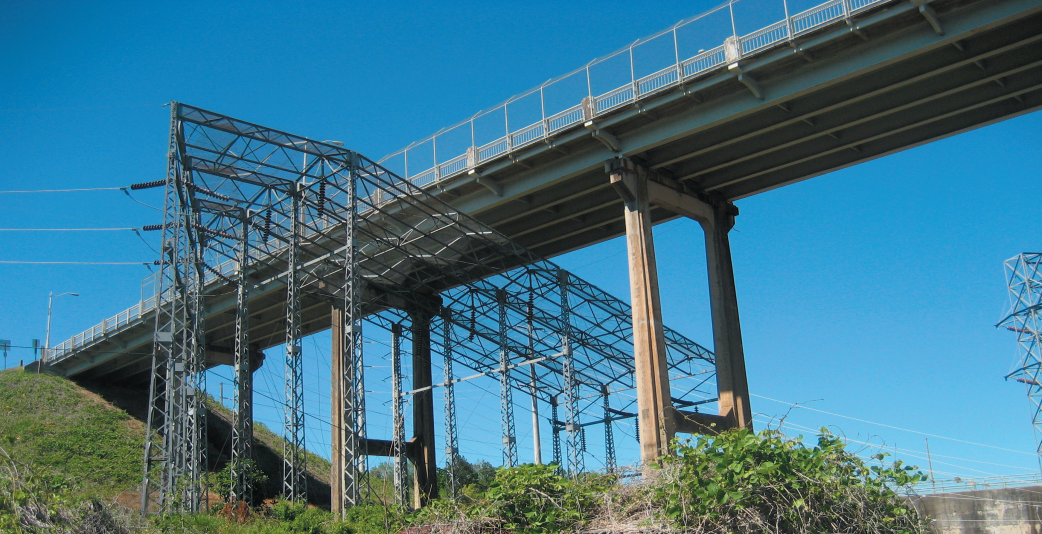
A defining advantage of the Tallassee Mill District is the presence of existing urban infrastructure — a critical factor in reducing redevelopment risk and accelerating project timelines.
Unlike greenfield development, the site benefits from legacy industrial infrastructure originally designed to support large-scale manufacturing operations. This existing framework provides a strong foundation for adaptive reuse.
Existing Infrastructure Advantages
- Established utility access corridors
- Downtown street connectivity
- Proximity to municipal services
- Walkable adjacency to Tallassee’s commercial core
Adaptive reuse projects benefit substantially from existing infrastructure, allowing developers to redirect capital toward tenant improvements and revenue-generating features rather than primary site construction.
Flood Risk & Environmental Status
Preliminary review indicates the redevelopment area lies outside FEMA flood hazard zones, reducing insurance complexity and long-term operational risk.
Environmental considerations typical of historic industrial properties — including lead and asbestos — are being proactively addressed through ongoing brownfield assessment processes. Early environmental evaluation significantly reduces uncertainty and allows remediation pathways to be incorporated into financing structures.
This proactive approach aligns with best practices identified in successful adaptive reuse projects nationwide, where early risk identification improves investor confidence and project feasibility.
Why Now
Several converging regional and national trends make this an unusually favorable moment for redevelopment of the Tallassee Mill District.
1. Adaptive Reuse Is Accelerating Nationwide
Industry analysis indicates adaptive reuse is becoming a dominant real estate strategy, with projections suggesting a majority of future real estate growth will involve repurposing existing structures rather than new construction.
Rising material costs and labor shortages increasingly favor projects that reuse existing buildings.
2. Demand for Authentic Places Is Rising
Modern consumers and travelers consistently favor destinations offering authentic historic environments over standardized development. Adaptive reuse projects create differentiated experiences that attract tenants, visitors, and investors alike.
Historic districts provide identity — a scarce asset in competitive regional markets.
3. Auburn Regional Growth Creates Spillover Opportunity
As nearby growth centers expand, development costs increase and available historic inventory declines. Secondary markets positioned within commuting and tourism distance often become the next wave of investment as developers seek lower acquisition costs paired with regional demand access.
Tallassee sits directly within this emerging opportunity window.
4. Local Momentum Is Already Established
- Professional redevelopment study completed
- Asset stabilization underway
- Continued Auburn University engagement
- City of Tallassee is actively pursuing re-development of nearby pedestrian bridge
- Community and institutional alignment
Developers entering at this stage benefit from groundwork already completed while retaining flexibility in project vision.
Vision Snapshot
The Tallassee Mill District represents an opportunity to transform a historic industrial landscape into a walkable mixed-use destination anchored by heritage, hospitality, and community activity.
Rather than a single project, the district functions as a portfolio ecosystem, where complementary uses reinforce one another:
- The Armory as a cultural and visitor anchor
- The Warehouse as flexible event and creative commercial space
- The Boiler Room as experiential hospitality and entertainment
- The 1852 Mill as riverfront-downtown accessible lodging and conference center space for regular and seasonal travel
Together, these assets can support a district defined by:
- heritage tourism
- destination dining
- events and gatherings
- creative enterprise
- regional visitation
The result is not replication of another downtown, but the creation of a place uniquely rooted in Tallassee’s industrial legacy — an environment increasingly valued by investors, tenants, and visitors seeking authenticity and experience.
You can see other ways that civic and local municipal leadership have engaged in development and public investment via the
250th Anniversary celebration and significantly
more local events than in years previous.
Community Support & Frictionless Transition
While the Tallassee Redevelopment Authority holds ownership,
the Talisi Historical Preservation Society
maintains a first right of review reflecting its long-standing stewardship of the property.
Developers who engage early with THPS benefit from local historical insight and strong community alignment, often
accelerating project support and public enthusiasm.
Prospective development teams are
encouraged to present conceptual plans at THPS meetings, providing an opportunity to
build early goodwill and incorporate local historical perspective into project design. Meetings are held 3rd Monday's at 6PM at the Tallassee Falls Museum.
Contact the TRA
If interested in opportunities at these sites you can contact the Tallassee Redevelopment Authority via the form above or at:
info@tallasseeredevelopment.com